🕊️ The Event of Jesus’ Baptism: The Beginning of God’s Transforming Work
Scripture: Matthew 3:13–17
At the Jordan River, Jesus stepped into the waters not for repentance, but for revelation. In that moment, heaven opened, the Spirit descended, and God declared love. The baptism of Jesus was not the end of something—it was the beginning.
God Made the Waters Holy
From the beginning, water has been a sacred element of God’s creative work. Before there was light or land, there was water—and the Spirit of God hovered over it. (Genesis 1:2)
Through water, God birthed creation, sustained life, and washed the world clean in the flood. Water parted to set Israel free and poured from the rock to sustain them in the wilderness.
When Jesus enters the Jordan River, those same waters are forever changed. God made the water transformational and holy—waters that now carry redemption as well as creation.
“Reflecting on how we are restored in the waters of baptism requires reflection on how God created, entered into, and radically transformed those waters.”
The Scene at the Jordan
After many years of silence, Jesus appears on the banks of the Jordan with a paradoxical blend of magnificence and humility. John’s prophetic voice had already called people to repentance. Crowds came confessing their sins, but Jesus—without sin—steps forward, not to repent but to redeem.
John hesitates: “I need to be baptized by you, and do you come to me?” (Matthew 3:14)
His reluctance shows deep reverence, and also clarity—he knows that Jesus is no ordinary baptismal candidate.
But Jesus responds gently, “Let it be so now,” or more literally, “Permit it.” This moment, He insists, must happen “to fulfill all righteousness.” Righteousness here doesn’t mean legality or moral perfection—it means obedience and discipleship.
Jesus’ baptism is an act of submission to God’s plan and participation in God’s unfolding purpose. John obeys. In doing so, he not only baptizes Jesus but also testifies to the dawning of God’s Kingdom.
The Beginning of Jesus’ Ministry
Matthew’s Gospel makes it clear: the baptism of Jesus is not the conclusion of His preparation, but the beginning of His mission.
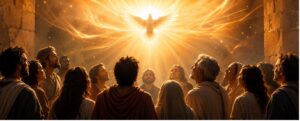
In this act, Jesus’ identity is publicly revealed and divinely affirmed. God tears open the heavens, the Spirit descends like a dove, and a voice declares:
“This is my Son, the Beloved, with whom I am well pleased.” (Matthew 3:17)
This declaration echoes Psalm 2:7—language of coronation and divine approval. It also foreshadows the cross, where this beloved Son will once again be obedient to the will of the Father.
The baptism of Jesus is a hinge in the story of salvation: the moment when God’s redemptive work moves from promise to action. From the waters of the Jordan, Jesus steps onto the road that will lead Him to the cross.
Solidarity and Transformation
Jesus did not need baptism for repentance. He entered the waters for our sake—to stand in solidarity with sinners, to identify with those He came to save.
The Greek word metanoia, often translated as “repentance,” means transformation and turning. Jesus’ baptism reveals that the life of faith is about more than confessing sin—it’s about turning toward God’s new creation.
By entering the water, Jesus shows us what divine humility looks like. God, who could remain distant, instead steps fully into human life—into its dirt, its pain, its limitations.
Karl Barth once wrote that this act summarizes the Gospel itself:
“God does not will to remain hidden in heaven but descends to the depths of earthly life to be seen and heard by us.”
The Spirit and the Son
As Jesus rises from the river, the Holy Spirit rests upon Him—not to give Him something He lacked, but to anoint Him publicly for His mission. Just as the prophets of old were anointed before their work began (Isaiah 42:1), so now the Spirit alights upon Jesus as a sign that His messianic ministry has begun.
This is not private empowerment but public commissioning. Jesus receives the Spirit in order to pour it out—to pass on the transforming grace that will renew creation itself.
A New Beginning for Us
Jesus’ baptism also reveals something profound about our own. Like His, our baptism is not an ending but a beginning—a commissioning for life in God’s Kingdom.
In baptism, we too are named, claimed, and filled with the Spirit. God declares over us:
“You are my beloved.”
Baptism transforms the personal into the communal. It’s where our private faith becomes public witness. Through the water, we die to sin and rise to new life in Christ. Through the Spirit, we are equipped for the ministry God entrusts to us.
Our baptism is not simply symbolic—it’s participatory. We join Jesus in His work of healing, reconciliation, and redemption. Like Him, we are called to live out our baptism daily: with humility, compassion, and courage.
The Fulcrum of God’s Story
At the Jordan River, Jesus stands as the fulcrum of God’s relationship with humanity—linking past, present, and future. John represents the prophets who came before; the Spirit represents the hope that will carry forward.
In that moment, heaven and earth meet in the waters of the Jordan. The Creator stands with creation. The Redeemer is anointed to begin His work. And the Spirit breathes new life into the world.
The story of salvation begins anew.
Reflection
At His baptism, Jesus identified fully with humanity so that we might be identified fully with God.
Through His humility, He made our redemption possible.
Through our baptism, we enter His story of grace.
“The old has gone, the new is here.” (2 Corinthians 5:17)
May we live each day as those who have stepped from the waters into new life.