An Easter Reflection
Rev. Joyce Rodgers
April 5, 2026
Wandering Heart — Week 7 | Luke 24:1-12
I found myself wondering what it felt like to wake up on that first Easter morning.
Not the version we celebrate now—with lilies and brass and alleluias—but the real one. The raw one. The one the disciples actually lived.
I imagine they woke up disillusioned. Maybe even a little angry.
Just days before, everything had felt like it was building toward something. There was momentum. Purpose. Meaning. Even the danger in Jerusalem seemed to confirm that what they were part of mattered. After all, people in power don’t get nervous about things that don’t matter.
But then Jesus was arrested.
And he didn’t escape.
He was beaten, humiliated, crucified.
And when he died… that was it.
Or at least, that’s what it felt like.
So they wake up that Sunday morning hiding, trying to make sense of it all. Wondering if it had all been a waste. Wondering if anything had really changed.
If there had been a soundtrack playing in that room, I think it might have sounded like Is That All There Is?.
Is that all there is?
The Women at the Tomb
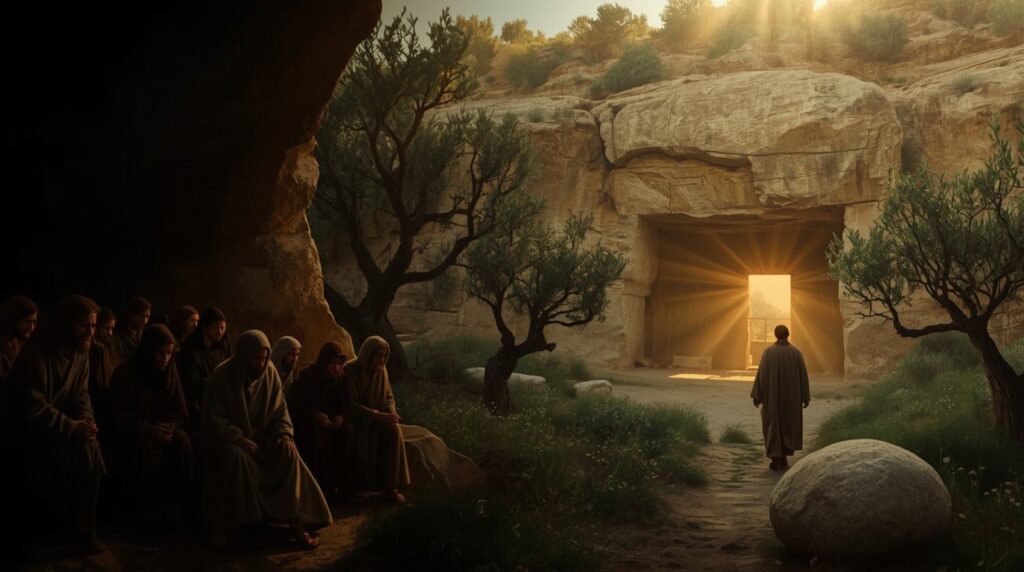
The women don’t go to the tomb expecting resurrection.
They go with spices.
They go to tend a body.
They go because love shows up—even when hope is gone.
They knew Jesus was dead.
The disciples knew Jesus was dead.
We knew he was dead.
But when they arrive, everything shifts.
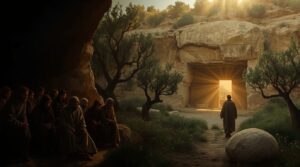
The stone is rolled away.
The body is gone.
And two men in dazzling clothes ask a question that cuts through their grief:
“Why do you look for the living among the dead?”
They remind the women: Jesus told you this would happen.
And suddenly, the song changes.
No longer “Is that all there is?”
Now it’s something closer to: This is not all there is.
When Hope Sounds Like Nonsense
The women run back to tell the others.
They are breathless. Urgent. Alive.
But the disciples don’t receive it that way.
Luke tells us they dismiss it as nonsense—literally as “garbage talk.”
The women—Mary Magdalene, Joanna, Mary the mother of James—aren’t unreliable voices. They are named, known, invested in Jesus’ ministry. Their testimony should matter.
But despair has a way of hardening us.
If you’ve already decided that nothing more is possible, even hope sounds ridiculous.
Peter’s “What If”
But then there’s Peter.
He doesn’t argue.
He doesn’t defend the women.
He doesn’t even speak.
He just wonders:
What if…?
And that small opening is enough.
He runs.
To the tomb.
To the possibility.
To the fragile edge of hope.
And what does he find?
Not Jesus.
Not angels.
Just folded linen cloths.
And somehow… that is enough.
When Faith Is All You Have
It’s tempting to think the first disciples had it easier. That seeing Jesus would make belief simple.
But they had already seen so much—and still, they struggled.
In the end, it comes down to faith.
Will we stay in the posture of “this is all there is”?
Or will we become people who are open to the possibility that there is more?
Will we be like:
- the disciples, clinging to despair
- the women, willing to listen again
- or Peter, running toward hope with only the smallest evidence
Easter as Birth
This year, I’ve been thinking about Easter through the lens of birth.
Lent as pregnancy.
Holy Week as labor.
Good Friday as the deepest pain.
And Easter?
Easter is transition.
That moment in labor when everything feels unbearable. When the pain seems pointless. When the person giving birth is convinced they cannot go on.
And yet—that is the moment just before new life arrives.
Easter is the world’s transition moment.
When everything feels like “Is that all there is?”
And God says: Not even close.
Not Escape—But New Creation
The resurrection is not just about Jesus coming back.
It’s about what his rising means.
Too often, we reduce Easter to escape:
- leaving earth behind
- going somewhere better
- enduring this life until we get to the next
But that’s not the story the resurrection tells.
Jesus doesn’t abandon creation—he redeems it.
The resurrection is not evacuation.
It is transformation.
It is the beginning of new creation.
The same creation God called good.
The same bodies formed by God’s hands.
The same world God refuses to give up on.
What If This Isn’t All There Is?
There are two ways people hear that question:
“Is this all there is?”
Some hear it as a conclusion:
This is it. Nothing more. No resurrection. No miracle. No hope.
Others hear it as a limit:
This world isn’t the point—we just need to get to heaven.
But Easter reframes the question entirely.
The answer is not:
- “Yes, this is all there is.”
- or “No, this doesn’t matter.”
The answer is:
This is not all there is—and what is coming is already breaking in.
Everything Has Changed
It’s easy to say, like the disciples, “Nothing has really changed.”
Easter says the opposite.
Everything has changed.
Death no longer has the final word.
Sin no longer defines the story.
Hope is no longer naive—it is reality.
And that hope is not just for someday.
It is for:
- when the economy collapses
- when illness comes
- when systems fail
- when grief overwhelms
Because resurrection isn’t just an event—it is a way of living.
And I Hope
At the end of it all, we are left with something like Peter:
Not certainty.
Not full understanding.
But hope.
A hope strong enough to run toward the tomb.
A hope grounded in what we have seen and heard.
A hope that trusts that what began in Bethlehem has not ended in the grave.
Like the old hymn says:
“And I hope, by thy good pleasure, safely to arrive at home.”
So when the world asks:
“Is that all there is?”
We don’t just answer with words.
We answer with our lives:
No.
Christ is risen.